
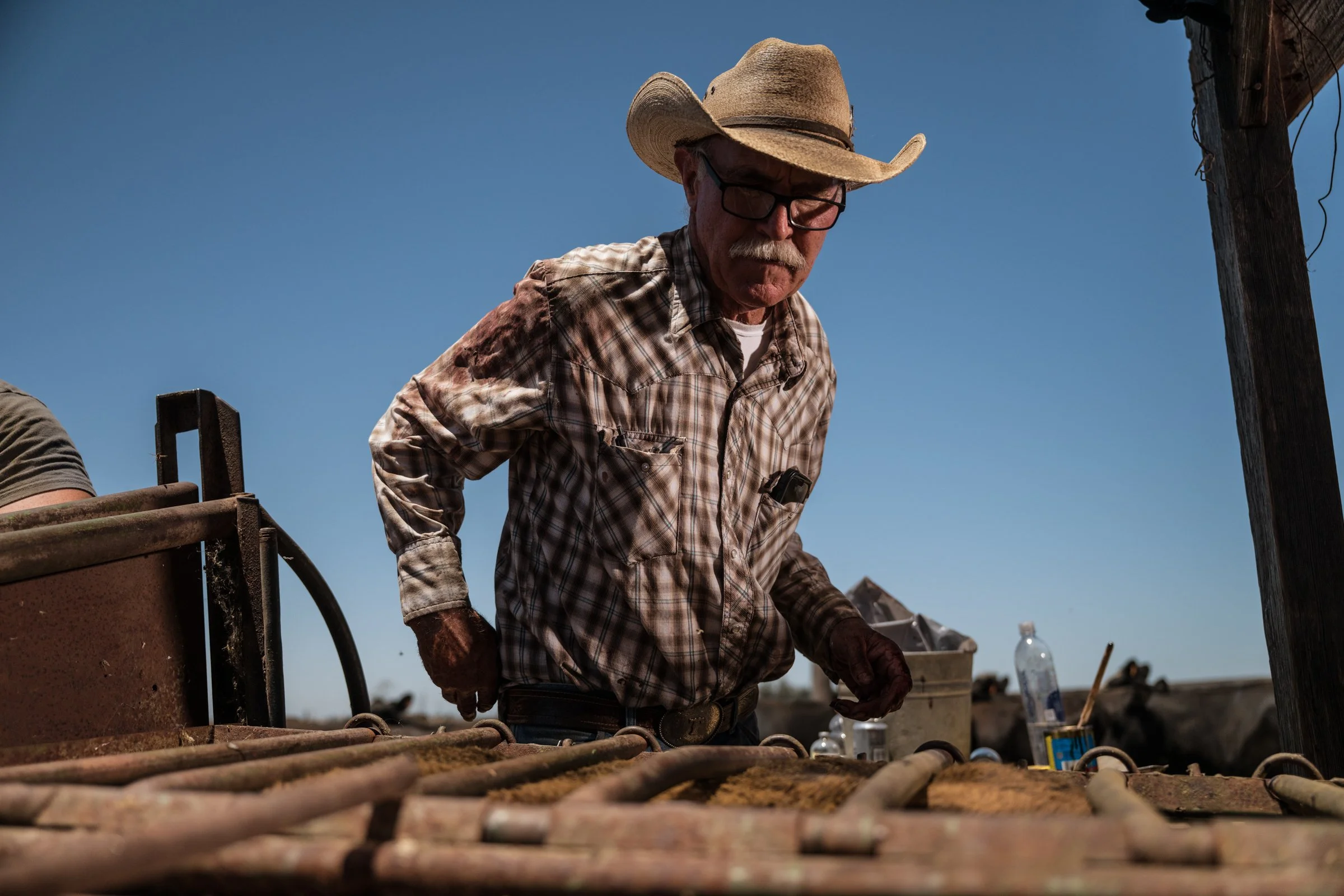
Mahon Ranch Cattle Roundup: A Day Inside a 140-Year Sacramento County Working Ranch
There’s a kind of clarity that only comes after spending a full day in the dust, heat, and rhythm of a working ranch. Watching generations of cowboys handle 120 head of cattle—not for show, not for nostalgia, but because it has to be done—reminds you what real work looks like. This wasn’t a photo op. It was a way of life. And I was grateful to be invited into it, camera in hand, just trying to do it justice.
The sun wasn’t high yet when the first gate clanged open. By then, the dust was already rising and the air carried that familiar weight of work. Out here, the job doesn’t wait for comfort. It gets done because it has to. That’s just the way it’s always been.
Jason Mayan rides alongside his daughter Mary at first light—a proud father guiding the next generation in the rhythm of ranch life.
The roundup at Mahon Ranch was underway. Roughly 120 head of cattle would pass through the chute before the heat gave way to evening. Vaccines. Ear tags. Eye treatments. Castrations. There was no ceremony to it—only rhythm. Purpose. And the quiet understanding of people who know exactly what needs to happen next.
They came in on four-wheelers and horseback. The machines cut through the open fields fast, but once the herd funneled into the corrals, it was the horses that mattered. They moved on instinct—a shift in the rider’s weight, a soundless signal. No commands shouted. Just trust built over time.
Cowboy Kona—steady in the saddle and generous in spirit. None of this would’ve happened without his invitation. Grateful for the trust and the open gate.
Troy Mayan on the quad, Kona on horseback—two generations, two approaches, one goal. Different tools, same mission: keep the herd moving and the tradition alive. Tyler Anderson holds the line on the far left, steady as ever.
I was there to photograph it. Not as a tourist, not as a guest—but as someone trying to blend in, earn trust, and get the kind of images that don’t happen unless you’re standing in the same dirt. Literally. At one point, a calf broke loose and it took three cowboys to wrestle it down. I swung my light, dropped to a knee, and framed the moment. Only later did I realize I’d knelt straight into a pile of fresh cow shit. That’s the price of a good photo. It didn’t even register.
Out here, you’re not just documenting a process. You’re stepping into history. The Mahon family has worked this land since 1882, when John Mahon purchased it and began raising hops. By 1890, it was one of the largest hop ranches in Sacramento County. Over time, hops gave way to wheat, cattle, and a way of life that ran deeper than profit margins. Four generations have lived and worked here—through Prohibition, war, drought, and inflation. Some things changed. Many didn’t.
The man I rode out with in the morning, Jack Mahon, told me stories of getting two weeks off school for harvest season. Everyone had a job. That was just life. A far cry from today, when most people driving down Grant Line probably have no idea a working ranch even exists beyond the trees.
That absence of recognition doesn’t bother the Mahons. They don’t chase attention. They just do the work. As Tom, one of the core men behind the operation, put it: “We were raised that the ranch comes first, then your family, and yourself a distant third.” Brutal? Maybe. But it’s how this place has endured.
Tom showed me a knife—an old one, worn and stained. He found it when he was 11 or 12, buried in a muddy riverbank. He gave it to his dad, who cleaned it up and gave Tom his own knife in return. They used the riverbank knife for castrations from then on. Still do. Thousands of bulls have passed through that blade. There’s history in its edge, and in the way it gets passed from hand to hand without fanfare.
Tom holds the same knife he’s used for decades—found as a boy in the mud near a riverbank, it’s become part of the ritual. Tools come and go, but some earn their place through time, grit, and tradition.
Many of the men working that day will likely carry this ranch into its next chapter. Jason. Tyler. Troy. They moved among the herd with purpose, some of them sons or nephews, others brought in through blood or bond. No one was just standing around. Everyone had a job. And there was no need to say much.
Tracy Lynn Mainville, Kona’s girlfriend, handles the chute with focus and calm. Like most on the crew, she jumped in wherever needed without hesitation.
Allysa Biddle doesn’t miss a mark. One hand on the brand, the other on break time — just another day at Mahon Ranch.
This wasn’t a public-facing event. It wasn’t a show. It was the kind of day that leaves your clothes stiff with dust, your hands raw, and your boots heavy. And yet, I loved every minute of it.
Some of the photos won’t make it into the public eye—not because they’re bad, but because they’re raw. Bloody tools. Split ears. A calf thrashing under the weight of three men. That’s the truth of it. Ranch work isn’t sanitized. It’s physical. It’s sometimes brutal. But it’s always done with care. You don’t put your hand on a tool like that without respect.
This is a way of life shaped by calloused hands, early mornings, and decisions that outlive the ones making them. You can feel it in the gates, the fence lines, the worn saddle leather. You can feel it in the way they look out over the fields, always measuring, always remembering.
The ghosts of cowboys past still roam this place. And every time someone swings a gate, ropes a steer, or drops to a knee beside a calf, they pay tribute.
My thanks to Cowboy Kona for the introduction and to the Mahon family for letting me into their circle, even briefly. I’ll be back. With my cameras. And probably with cow shit on my boots.
Tom Mayan and his son Troy — two generations bound by dirt, grit, and a deep loyalty to the land. One raised on the ranch, the other raised by it. Tradition doesn’t just continue here — it stands shoulder to shoulder.
Two trades, same principles. Tom with his pocketknife—broken in by decades of work. Me with two cameras—still trying to keep up.
Technical Note
This was a self-assigned project—something I believe every working photographer should make time for. It wasn’t for a client, a publication, or a paycheck. It was driven by curiosity, respect for the craft, and a desire to tell a story that deserves to be told.
The images were captured using a Nikon Z9 with a 70–200mm lens and a Nikon Z8 with a 24–70mm lens—both dependable tools in fast, dusty, and physically demanding conditions. Lighting was added with a Godox AD600 strobe and a Phottix deep dish to push through harsh midday sun. I used a Cotton Carrier 3G harness to manage both cameras comfortably throughout the day, and each lens was fitted with a circular polarizer for better control of tone and reflection.
Sometimes, the tools help elevate a story. Other times, they just help you keep up.
Ready to go with all my gear thanks for the photo Tracy!
Embracing Faith and Photography: Documenting the National Eucharistic Pilgrimage
The Decision to Volunteer
When the National Eucharistic Pilgrimage came up, it piqued my interest as a photographer and someone on a faith journey. I reached out to the organizers, and they were incredibly receptive. Adjusting my schedule to volunteer was a joy, as it allowed me to witness the dedication and faith of the pilgrims firsthand.
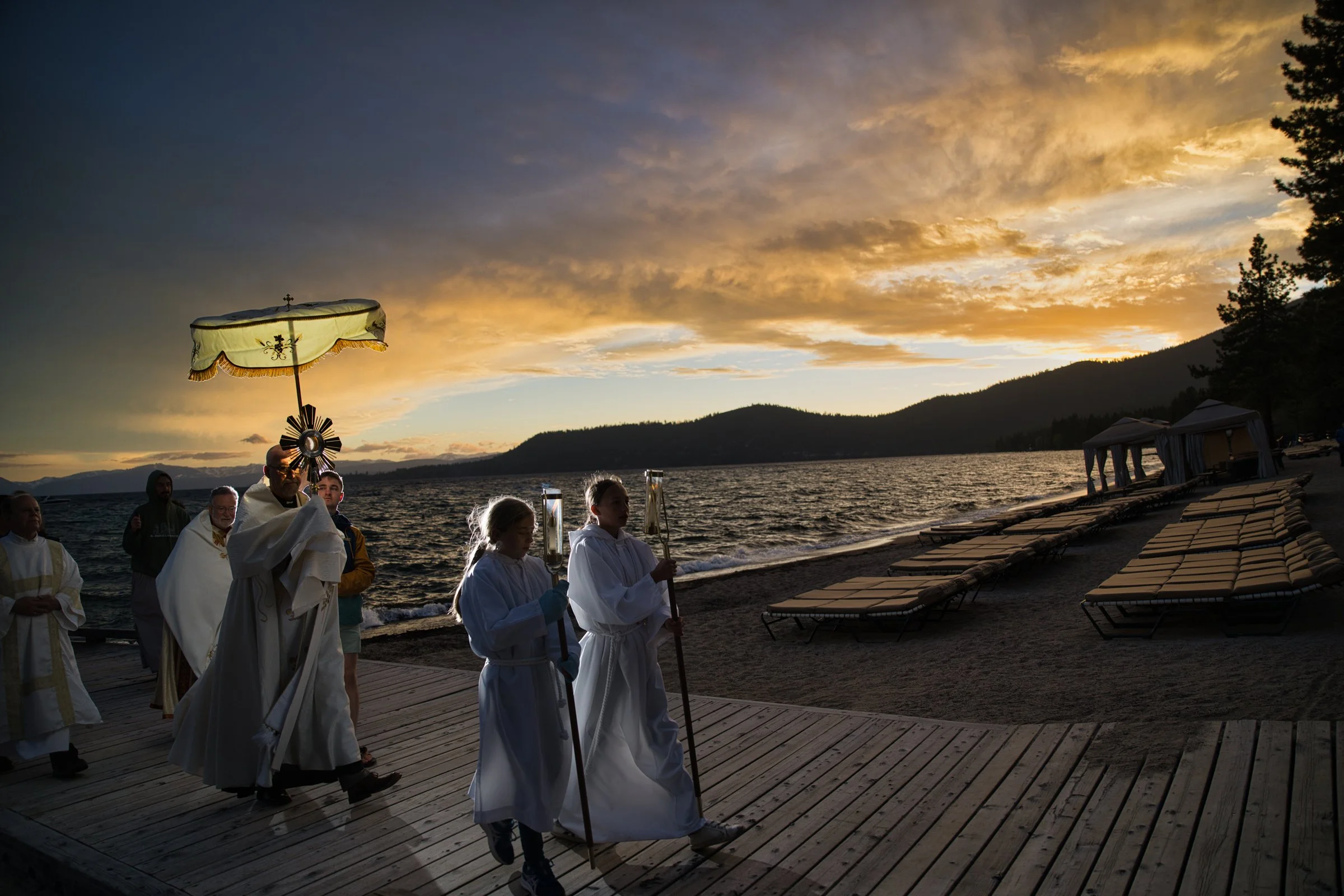
A Journey of Faith
Fr. Luke Joseph Leighton
Almost a year ago, I began exploring my faith more deeply. While my wife and family have always been devout Catholics, this was the first time I truly engaged with it. This new awareness led me to pay closer attention to events like the National Eucharistic Pilgrimage, seeing it as more than a photographic subject.
The Decision to Volunteer
When the National Eucharistic Pilgrimage came up, it piqued my interest as a photographer and someone on a faith journey. I reached out to the organizers, and they were incredibly receptive. Adjusting my schedule to volunteer was a joy, as it allowed me to witness the dedication and faith of the pilgrims firsthand.
The Process and Experience
The pilgrimage was a testament to faith and commitment, requiring extensive planning and effort. Witnessing the joy among the pilgrims and those joining in was inspiring. However, as a photographer, I had to maintain a certain detachment. While moments of reverence called for kneeling in church, I had to remain standing, ready to capture the perfect shot.
The Importance of Creative Engagement
As a photographer and creative, diving into subjects without financial gain is crucial. Often, these projects cost me money because I must forgo other work, but they fulfill me creatively and spiritually. This experience with the pilgrimage has not only deepened my faith but also significantly improved my craft. Engaging with meaningful subjects enhances my technical skills and mental approach, enriching my creative process.
Technical Aspects and Personal Touch
Bishop Jaime Soto
The pilgrimage culminated in Lake Tahoe, where my wife joined me. Her presence was invaluable, not just emotionally but also technically. She handheld a small strobe opposite the camera, providing an excellent edge light and, in one instance, creating a dramatic reflection of the monstrance into the bishop’s face. This collaboration added depth to the visual storytelling and made the experience even more special.
Conclusion
From left to right: Father Luke Leighton, Me, Madison Michel, Jack Krebs, Jimmy Velasco, Dereck Delgado, Chas East, Chima Adiole, Jaella Mac Au, Brother Matthew Solanus, Patrick Fayad.
Documenting the National Eucharistic Pilgrimage was a unique blend of faith and photography. With 1317 images captured, I look forward to sharing this visual narrative, reflecting the spiritual journey and the technical artistry involved. Stay tuned for more as I explore and document these meaningful moments.
Really enjoyed my time with Fr. Luke Joseph Leighton
Legacy in Focus: Capturing the Spirit of The Lonesome E Cattle Company
Documentary photography from The Lonesome E Cattle Company in Madera County, California — capturing the legacy of Black cowboy culture and the Campbell family's multigenerational ranch heritage.
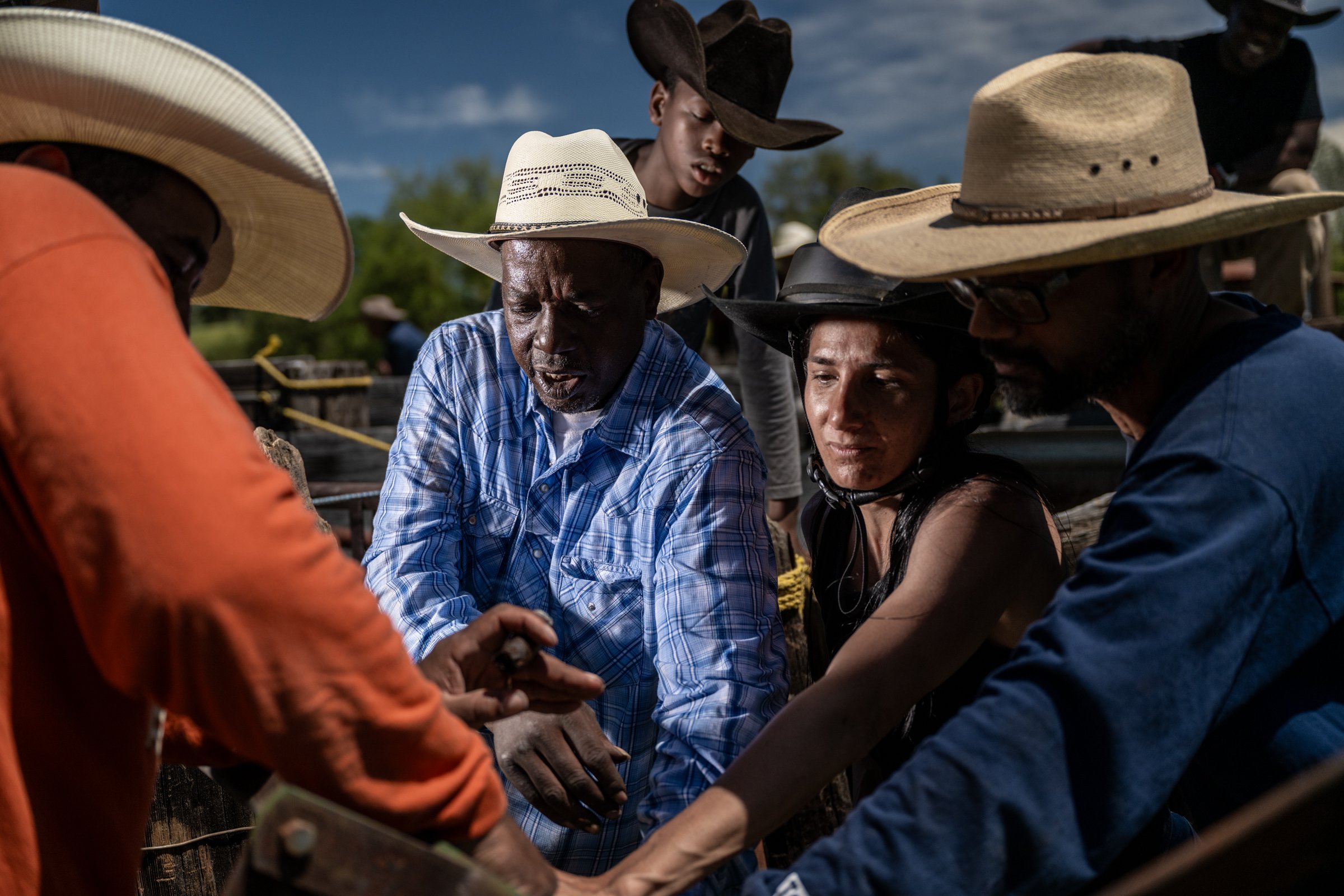
In the rolling foothills of Eastern Madera County, where the legacy of Edward E. Campbell, Sr. intertwines with the land, the spirit of The Lazy E Ranch—now known as The Lonesome E Cattle Company—continues to thrive. This past weekend, I had the distinct honor of capturing a living tapestry of this legacy: a Black cowboy round-up that was as much about community as it was about cattle—a gathering that welcomed all, fostering a sense of belonging and shared purpose.
Rooted in History: The Journey from Texas to California
The Campbell family's story is deeply woven into the broader narrative of African American Black Cowboys who helped settle the Western frontier. The lineage of the Campbell family traces back to Clem Campbell Sr., born in 1868. A rancher in Cuero, Texas, he and his father, Jack Campbell, played a part in the tales of the Old West, aiding outlaws Frank & Jessie James. In exchange for shelter under the floorboards of their modest shacks, the James brothers would rustle cattle to feed the residents of a newly freed slave community. This spirit of resourcefulness and resilience has echoed through generations and brought the family to the present-day Lonesome E Ranch, nestled in the heart of Raymond, California.
A Heritage Reclaimed and Revered
The Lonesome E Cattle Company is more than a place; it's a living testament to the Campbell family's dedication and dreams. Led by Edward E. Campbell, Jr., affectionately known as Beau, and his wife Pamela, the family upholds a legacy that extends far beyond the ranching operations started by his father. It's a testament to the enduring power of a vision, passed down through generations like a cherished Stetson hat, fitting each new wearer just as it did the last.
The Round-Up: A Testament to Tradition
The round-up I witnessed was a vibrant tapestry of camaraderie, tradition, and familial pride. Cowboys and cowgirls gathered not driven by financial gain but by a deep love for their heritage and each other. The scene echoed the historic gatherings of Edward Sr.'s time, filled with the aroma of barbecue, the clatter of dominoes, and the thud of horseshoes—timeless summer traditions now rekindled by the current generation.
In the Dust and Dawn: Moments Made Immortal
As the morning light spilled over the hills, the present-day cowboys, with ropes and reins in hand, honored their heritage with every calf roped and every brand sizzled into the hide. The physicality of the round-up was undeniable—a dance of grit and grace, a choreography perfected by the calloused hands of experience and the eager grips of youth learning the ropes.
Under the Same Skies: A Family's Heartbeat
Through my viewfinder, the heartbeat of the Campbell family was unmistakable. The ranch resonated with the sounds of joy, the shared respect for the livestock, and the collective remembrance of a family's journey from the pastures of Texas to the rolling hills of California.
Conclusion: The Future Framed by the Past
As I ready to share this collection of images, I'm reminded that The Lonesome E Cattle Company is more than a ranch; it is a sanctuary where past, present, and future are indelibly inked into the landscape. This round-up was a celebration of a way of life, a family heritage that Beau and Pamela Campbell intend to preserve and share through annual round-ups and trail rides—inviting everyone to partake in the celebration of heritage and local history.
"West of Yellowstone, South of Yosemite," the Lonesome E Ranch stands as a beacon of history, where redwoods dedicated to the memory of family members guard the stories and spirits that will continue to roam these lands. Join us as we honor the past and embrace the future, preserving and cherishing the legacy of The Lonesome E Cattle Company for generations to come.
Stay tuned for the visual chronicle of this remarkable day not just the enduring legacy of The Lonesome E Cattle Company but also the unbreakable bonds of the family it continues to foster.
For those interested in the technical side of round-up photography, my trusty Nikon Z9 was at the heart of it all, paired with two versatile lenses: the 24-70mm for wider scenes and rapid movements and the 70-200mm for those tight, close-up shots of the action. To ensure the cowboys and cowgirls were lit perfectly, I utilized the reliable Godox AD600 Pro strobe with a Phottix 7-inch dish that provided just the right amount of fill light. All of this was supported, quite literally, by the robust Benro Mammoth TMTH34C Carbon Fiber Tripod, topped with a Benro GX25 Lowprofile Ballhead for smooth adjustments and stability. This gear setup was instrumental in capturing the dynamic essence of the rodeo, freezing each moment with clarity and precision.
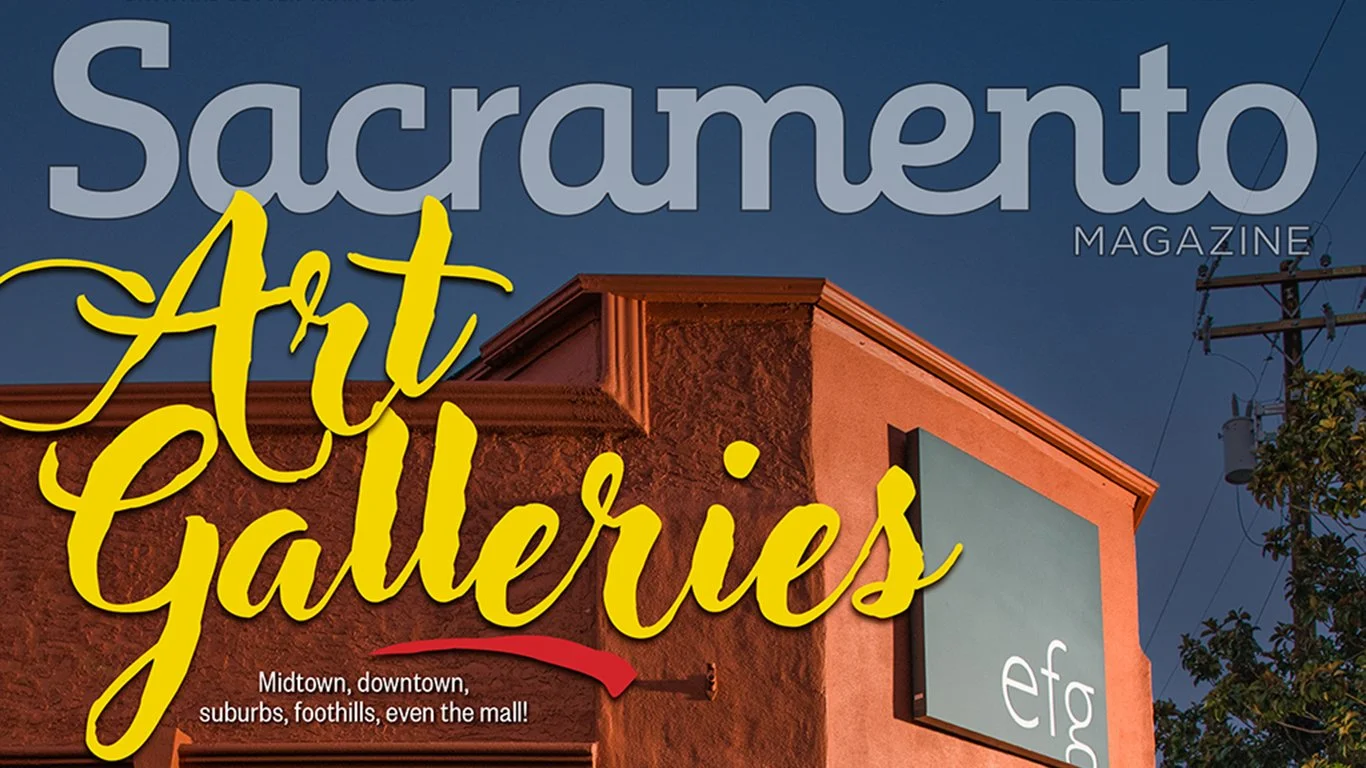
February 2023 cover for Sacramento Magazine
As an artist, there's nothing quite like seeing your work featured in a publication, especially one as prominent as Sacramento magazine. I was thrilled to have the opportunity to create the cover artwork and interior feature image for this month's issue, which focused on local art galleries.
In the process of completing this assignment, I had the pleasure of visiting several of Sacramento's most renowned art galleries, including Elliott Fouts Gallery, Archival Gallery, Axis Gallery, Blue Line Arts, The Brickhouse Gallery and Art Complex, Kennedy Gallery, Latino Center of Art and Culture, and Twisted Track Gallery. Each visit was a unique experience, and I was struck by the incredible range of talent and style on display. It was a powerful reminder of the thriving arts community that exists right here in Sacramento.
As an artist, there's nothing quite like seeing your work featured in a publication, especially one as prominent as Sacramento magazine. I was thrilled to have the opportunity to create the cover artwork and interior feature image for this month's issue, which focused on local art galleries.
In the process of completing this assignment, I had the pleasure of visiting several of Sacramento's most renowned art galleries, including Elliott Fouts Gallery, Archival Gallery, Axis Gallery, Blue Line Arts, The Brickhouse Gallery and Art Complex, Kennedy Gallery, Latino Center of Art and Culture, and Twisted Track Gallery. Each visit was a unique experience, and I was struck by the incredible range of talent and style on display. It was a powerful reminder of the thriving arts community that exists right here in Sacramento.
For the cover image, we decided to photograph the exterior of Elliott Fouts Gallery. This required a bit of preparation, including the setup of four lights and some creative thinking to add some extra visual interest. I also enlisted the help of my trusty assistant, Kevin, who was kind enough to fetch countless buckets of water to create the perfect wet sidewalk effect.
Working with the Art Director, Gabriel, we were able to recruit the one and only Phoebe Verkouw (IG: thedressfiend) and some of her fashionable friends as our cover subjects. Phoebe is a true professional, and I always enjoy collaborating with her.
All in all, it was an incredible experience, and I'm grateful to Sacramento magazine for giving me the opportunity to showcase my work in such a meaningful way. I hope this issue inspires others to explore the rich and diverse arts scene that can be found right here in our city.
2022 in review
As a photographer, I always aim to capture the beauty and emotion in the world around me. And in 2022, I had the most wonderful year as a photographer. My name is Tim Engle, and I have been a photographer for 27 years. This year was not only the most fun I've had, but it was also incredibly fulfilling.
One of the things that made this year so incredible was that I felt like I had truly mastered my craft. After 27 years of being a photographer, the technical aspects of the job no longer felt overwhelming, and I had a deep understanding of my equipment and knew how to use it to its fullest potential. This allowed me to focus on the art and the interaction with my subject.
I also felt like my connection with my subjects was stronger than ever before. I had a real understanding of what they wanted to convey through their photographs and was able to capture that emotion in a way that truly resonated with them. I received countless messages from people thanking me for capturing special moments in their lives, which was incredibly rewarding.
Overall, 2022 was a fantastic year for me as a photographer. I captured so many beautiful images and had so many wonderful experiences. I am grateful for the opportunity to do what I love and look forward to continuing to capture the beauty in the world for many years to come.
Below is just a small sampling of the year.
The G.O.A.T
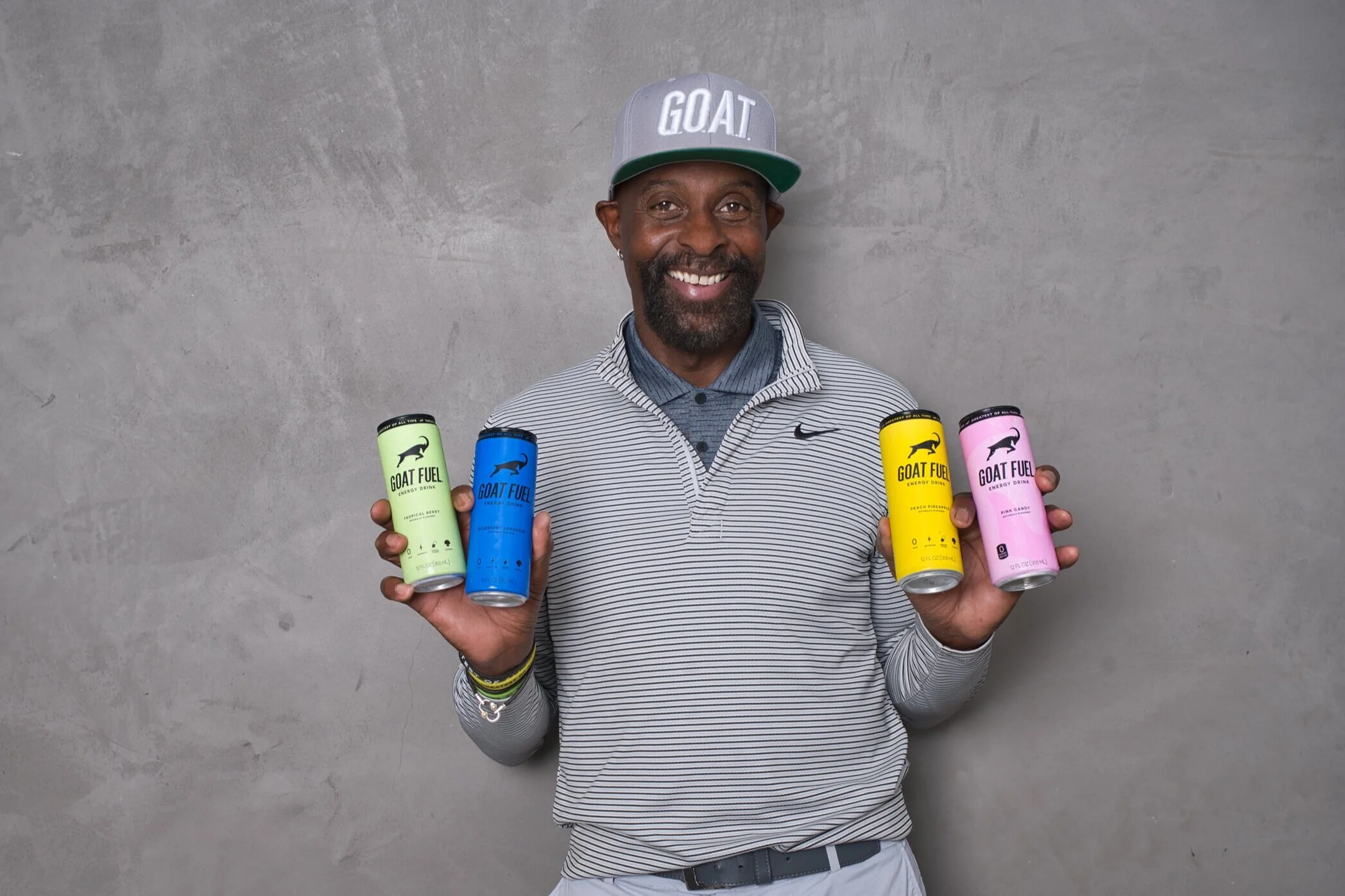
Recently I was asked to photograph Jerry Rice, a retired San Francisco 49er wide receiver, NFL Hall of Famer, and one of the athletes that I watched growing up. I have a great friend Stephanie Suddarth who is now the general manager of his energy drink company called G.O.A.T. fuel (Greatest of All Time).

As a photographer, we meet many different people from business owners and tradesmen to athletes and actors.
Jerry Rice, Retired San Francisco 49er wide receiver and NFL Hall of Famer.
Recently I was asked to photograph Jerry Rice, a retired San Francisco 49er wide receiver, NFL Hall of Famer, and one of the athletes that I watched growing up. I have a great friend Stephanie Suddarth who is now the general manager of his energy drink company called G.O.A.T. fuel (Greatest of All Time). His daughter is the president. I was asked to travel to the Bay Area to make some marketing and PR images of Jerry for social media usage. So I spent Thursday evening and Saturday morning photographing him during various activities.
During the Saturday morning session, I was able to shoot individual images of him.
Saturday's location was a brand new hotel in Silicon Valley. When I arrived I scouted out a gray area in the parking garage that I could use to make my portraits. As the morning progressed and I was photographing the various events, Jerry turned and said, “Hey, let's do those images now. I have 20 minutes before I have to leave.” Thank goodness I had scouted out my spot and planned out what I wanted to do. My assistant Skip and I hurried over and set up five portrait scenarios in about eight minutes. Jerry came over, and we were able to make about 200 images in 12 minutes. All the scenarios except for one worked out.
This is the area I scouted when we arrived. Having Skip as my assistant sets my mind at ease. He is so good at what he does.
After we finished, I shared the story with Jerry about how my father had a personalized license plate that said RICEDAY. I kept them after my father's passing and have had them in the garage for years. I brought them to show Jerry and he was happy to sign them. They will make for some good conversation pieces.
My dad and I watched the 49ers for decades, his license plates are a testament to it.
One of the takeaways from the assignment is to know your gear and have a plan going into a shoot. Be ready to go. If I had tried things I hadn't done or wasn't comfortable with my equipment, it could've been a disaster.
Top Doc
I am excited to wrap up the year with another cover for Sacramento magazine.
The assignment was for the "Top Doc" December issue.
Dr. Christopher Bayne
I am excited to wrap up the year with another cover for Sacramento magazine.
The assignment was for the "Top Doc" December issue.
The assignment on this one was to photograph two doctors, one for the cover and one for the inside. As always, Gabriel gave me good parameters to go on but left the lighting and treatment up to me.
Working on my inspiration, I looked to one of my favorite photographers Dan Winters. I love his lighting style and treatment. After I settled in on what I was going to do, I did a few lighting tests with my son Ethan. I am pleased with how it worked out.
Ethan Engle
For the two portraits, I had to have Covid compliance. I put my set in the studio's opening to minimize the need to come too far inside. It's definitely an advantage to have a large rollup door at the studio.
The final lighting set up was between two and three lights for each shot. I didn't need to light the whole body, so I was able to use smaller modifiers.
Dr. Laura Kester
This is another image of Gabriel that was a test before the doctors arrived.
Gabriel Teague
I can't emphasize enough the power in testing and working with your stuff before the actual shoot. The last thing I want to do is be messing with my lights while I'm trying to connect with my subject. All of the tech parts need to be out of your way before you push the button.